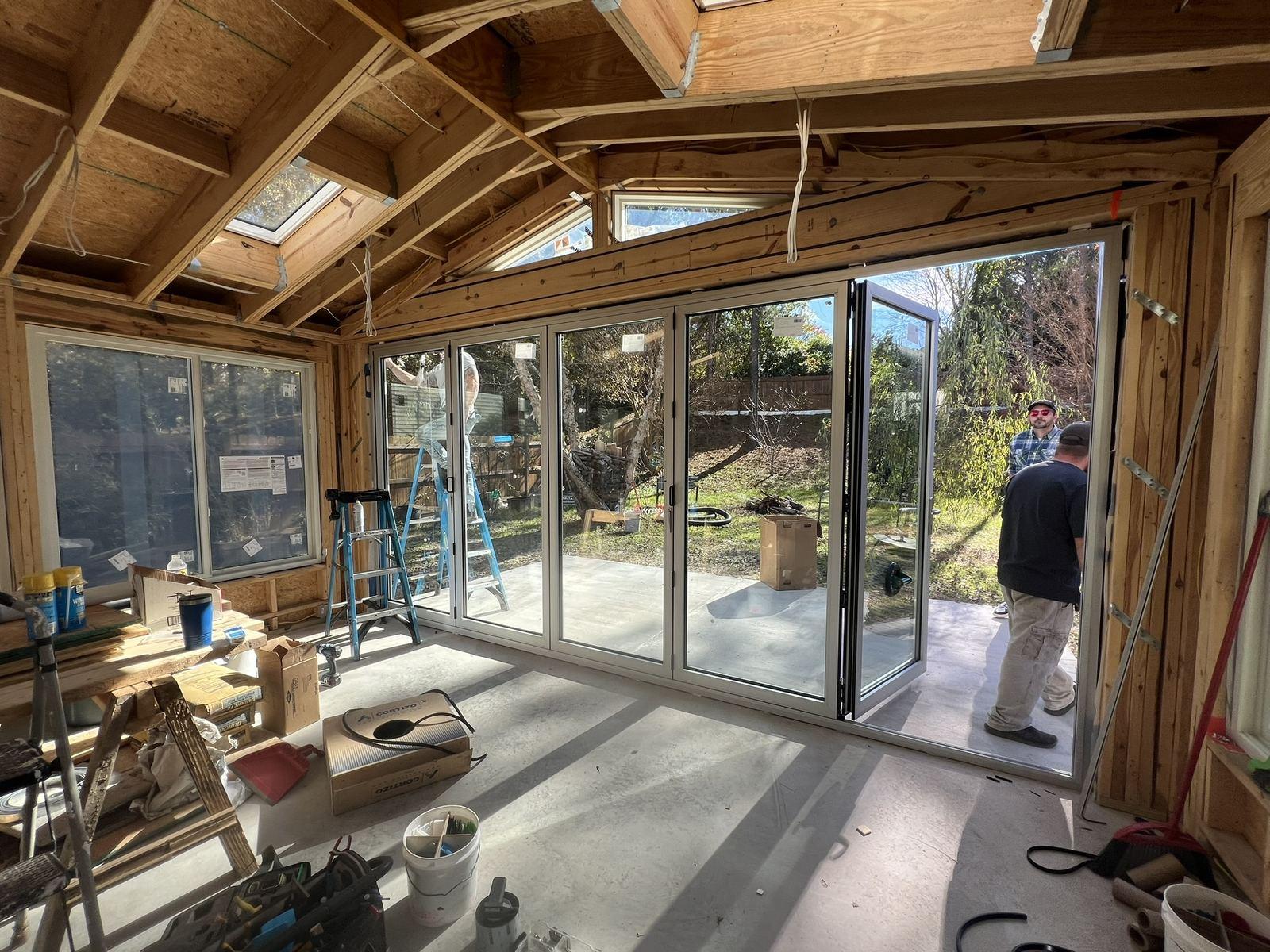
The work everything
else sits on.
Concrete Contractor in Cary, NC
Driveways and patios through to commercial slabs and warehouse floors. Most of what makes concrete last is decided in the ground before any of it is poured.
What we pour.
Driveways
New driveways and full replacement of failed ones, including breaking out and removing the existing slab before anything new is formed.
Patios
Poured patios and terraces, set out to work with the levels around them rather than sitting proud of the ground they meet.
Sidewalks & walkways
Paths and walkways connecting drives, entries and outdoor spaces, formed to follow the grade they cross.
Slabs
Slabs for additions, outbuildings, equipment and structures, prepared and poured as part of the wider construction where relevant.
Footings & foundations
Footings and foundation work carried out as part of our own construction projects, where the concrete and the structure above it are handled by the same contractor.
Warehouse & commercial floors
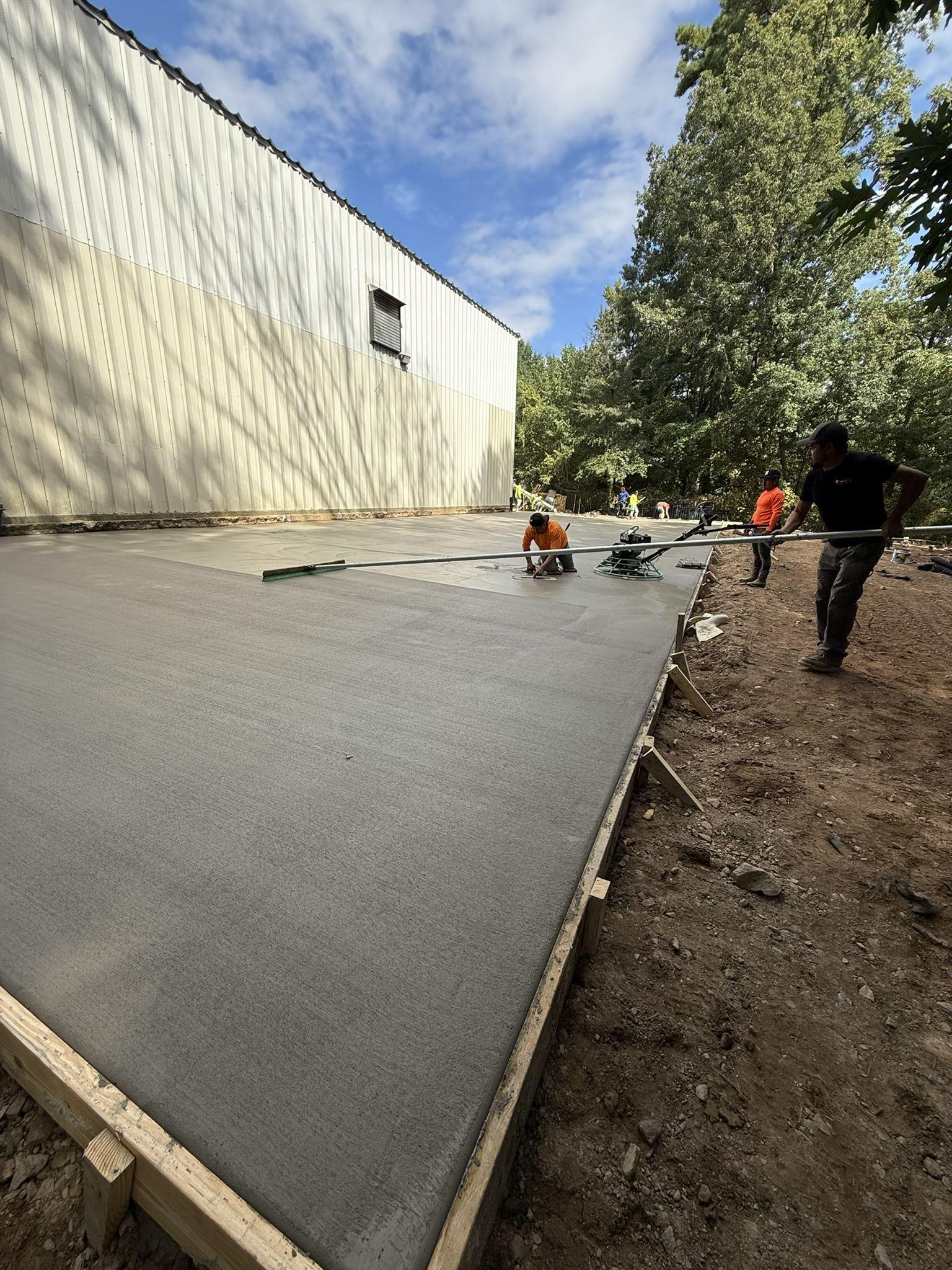
Interior slabs and floors in working commercial buildings, plus exterior slabs and sitework running alongside them.
Ground, prepared, poured, cured.
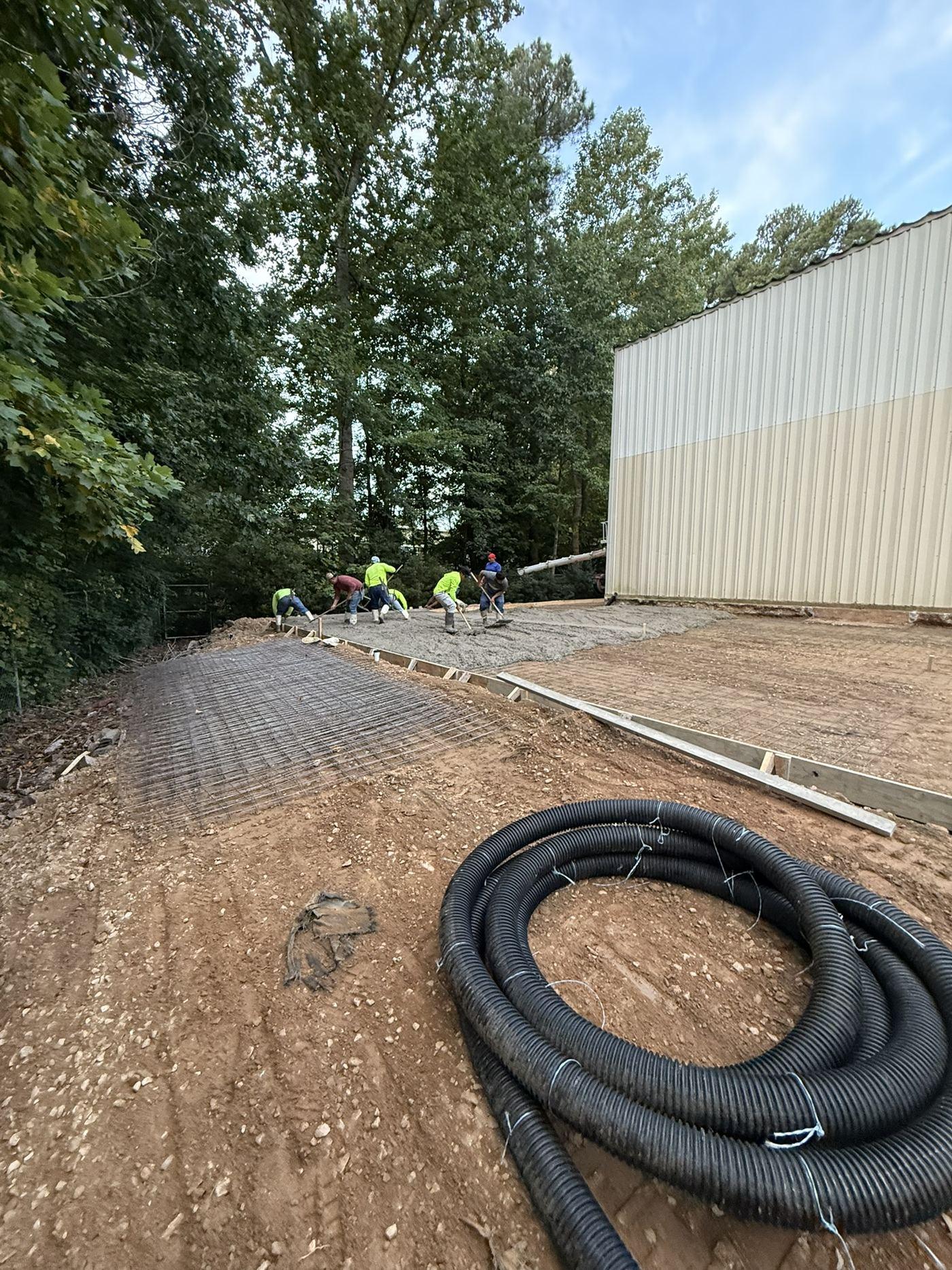
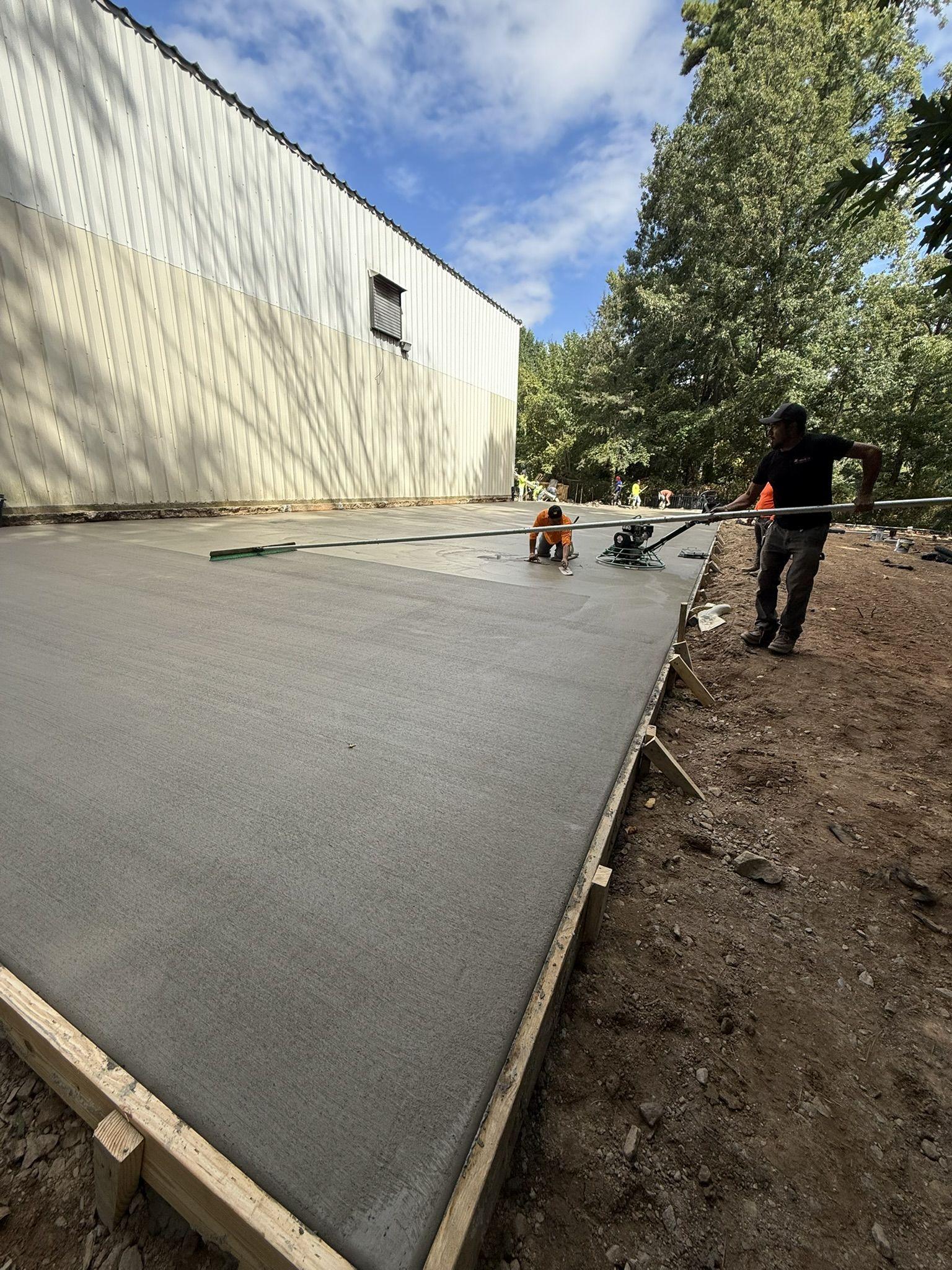
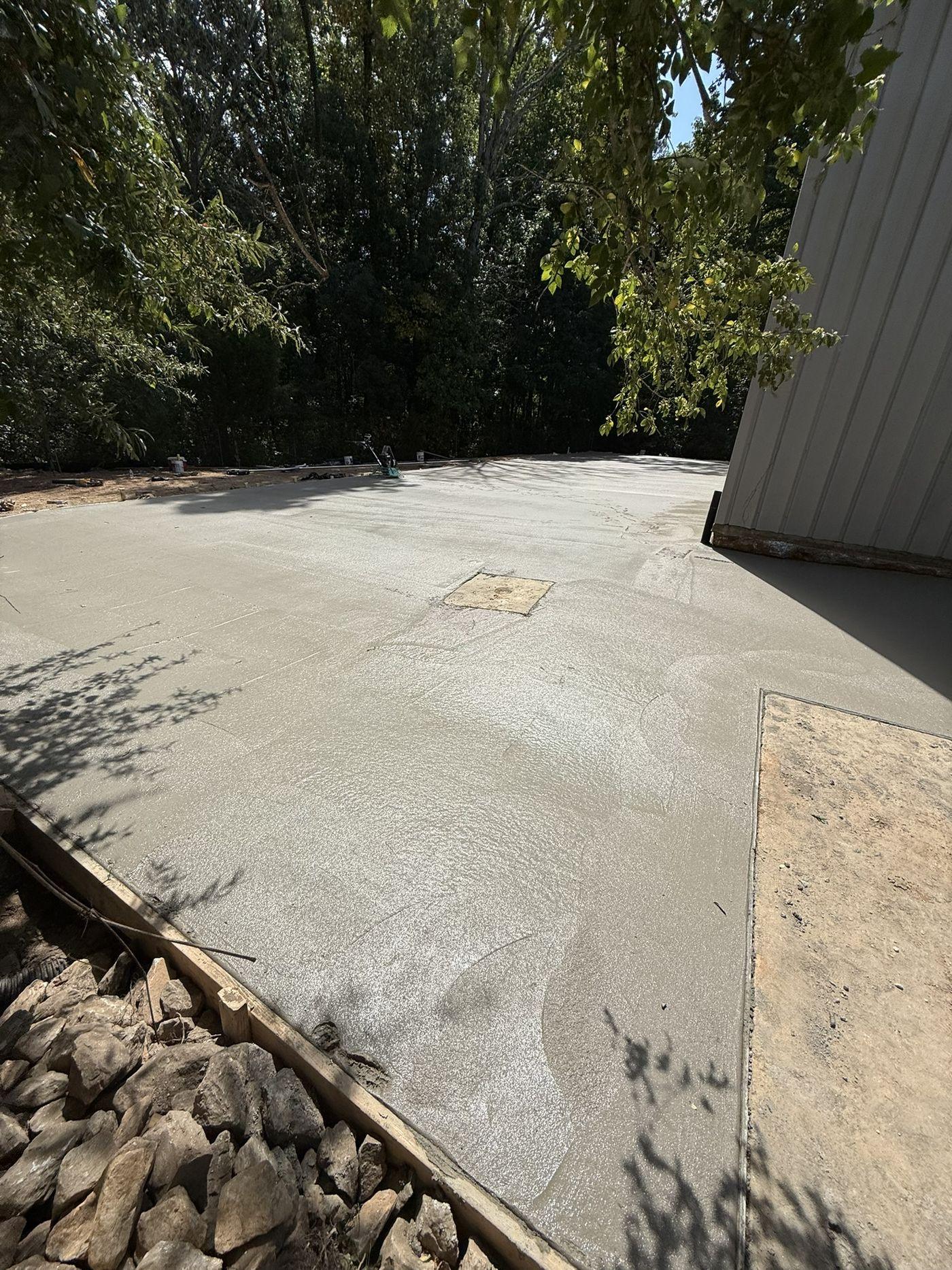
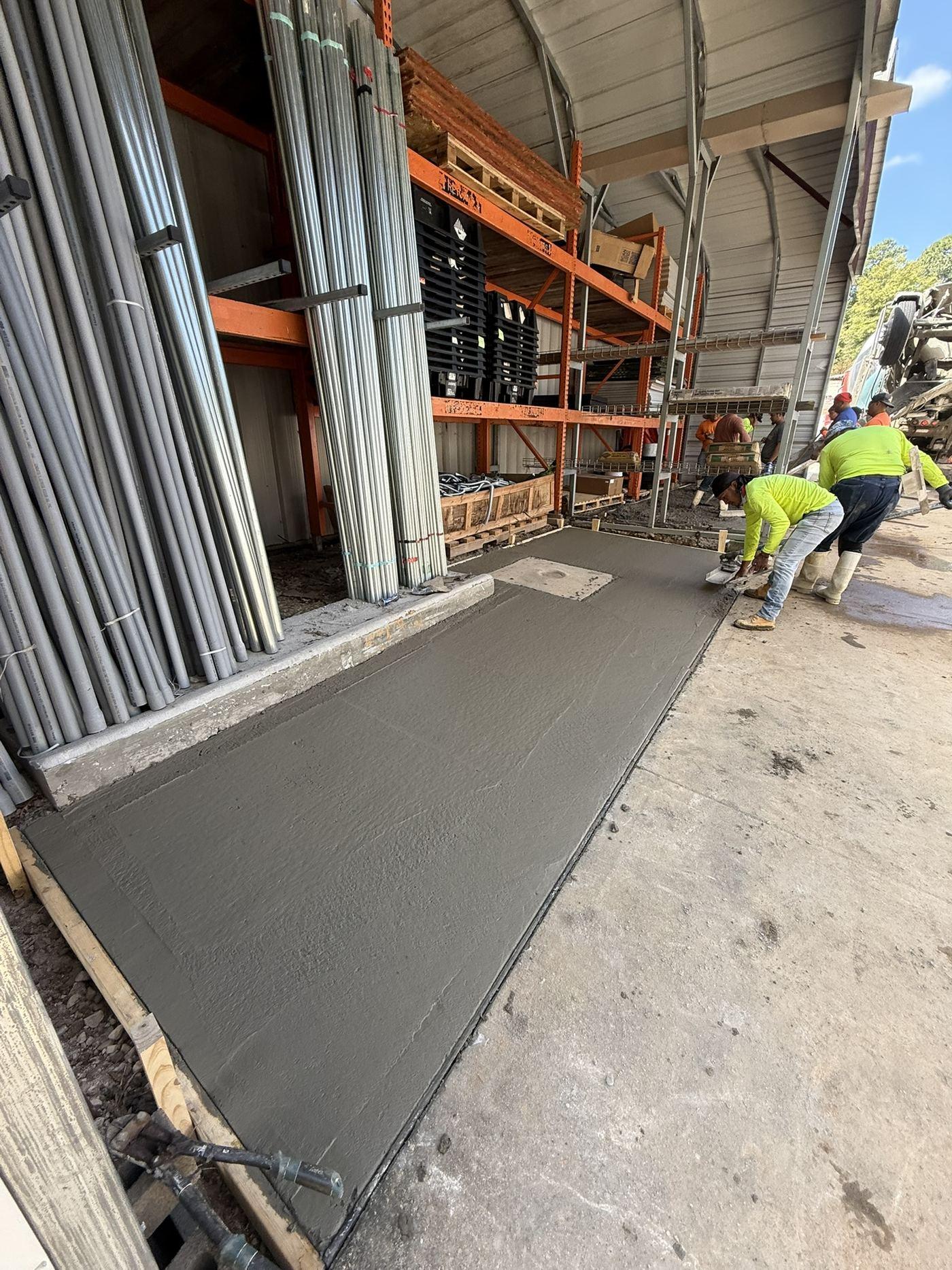
One commercial slab, photographed from unimproved ground through to a working surface.
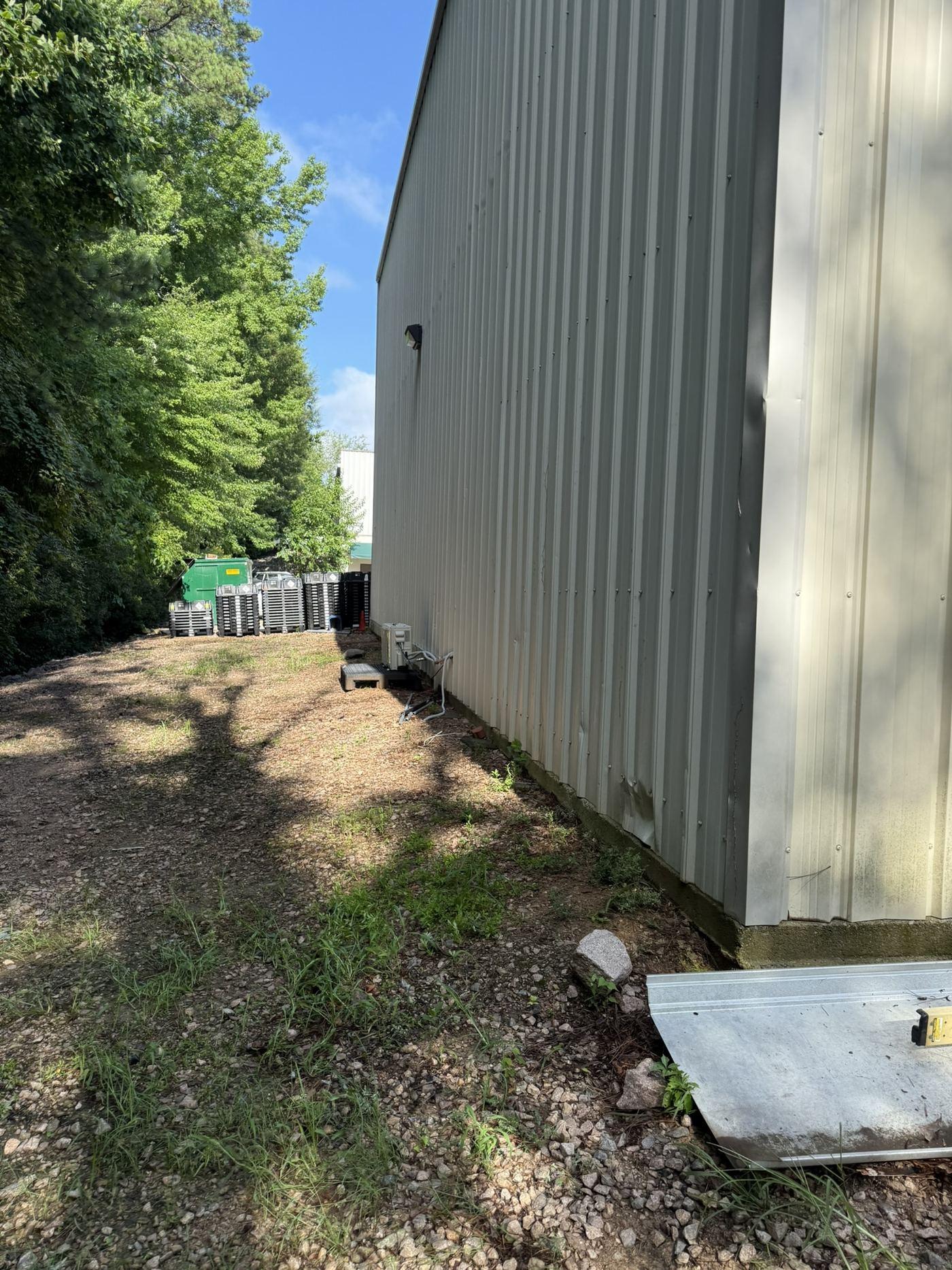
Existing site
The ground as it starts — what is there, how it drains, and what has to be cleared before anything else can happen.
Preparation
Clearing, grading and drainage. Most of the durability of a slab is decided here, under the part nobody ever looks at.
Forms & set-out
Edges formed and levels set so the finished surface lands where it needs to and falls the way it should.
Placement
Concrete placed and worked out to the forms, with enough crew on site to keep the pour continuous.
Screed & float
Screeded off and floated to the surface finish the job calls for — a warehouse floor and a residential patio are not asking for the same thing.
Completed surface
Cured and left as a working surface, tied into whatever it meets at its edges.
Residential and commercial.
The same crew and the same preparation. What changes is the context the surface has to work in.
Driveways, patios, walkways
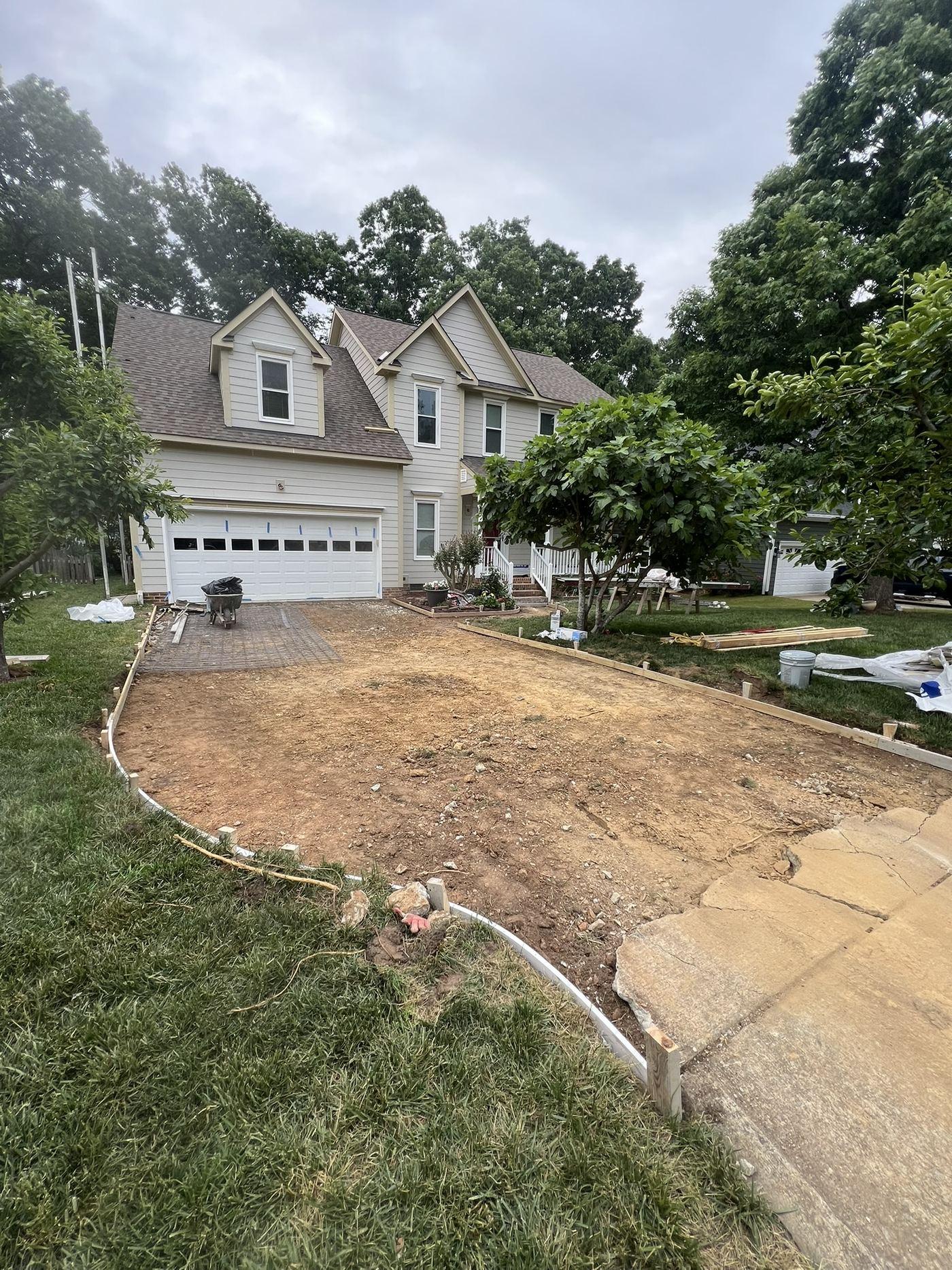
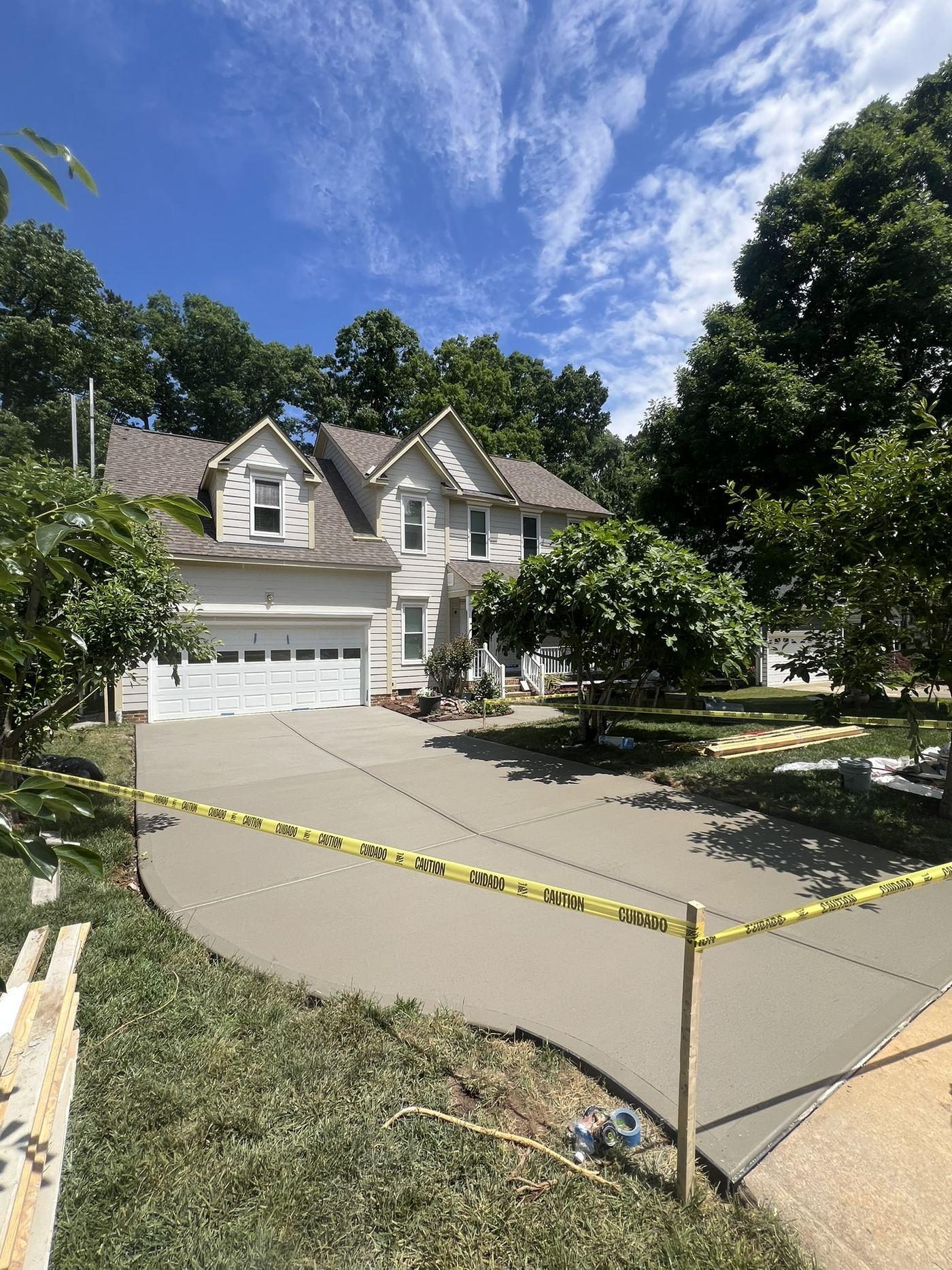
Usually replacing something that has failed, in a finished garden, with access through a side gate and a house to protect. The concrete has to meet existing levels at the garage, the path and the lawn without anything looking added on.
Slabs, floors, sitework
Larger areas, more crew on site to keep a pour continuous, and usually a building that has to keep operating around the work. Interior floors bring their own constraint: everything has to come in and out through the doors the building already has.
Why concrete gets replaced.
A lot of our residential work is replacing a surface that failed. What went wrong is almost always beneath it rather than in it.
What was underneath it
Concrete poured onto ground that was not properly cleared, compacted or drained will move once the ground beneath it does. Most failed slabs are a groundwork problem showing up years later.
Where the water went
Water collecting under or against a slab, or running toward a building instead of away from it, undermines the surface and the structure next to it. Grade and drainage get set before the forms go in for exactly this reason.
What grew into it
Tree roots lifting a driveway or walkway are a common reason for replacement rather than repair, and worth identifying before a new surface goes down in the same place.
How it met everything else
Junctions with the garage, the house, a path or the street are where surfaces crack and lift first. Replacement is a chance to detail those properly rather than repeat them.
Concrete is a site problem first.
Before anything about the concrete itself matters, three things about the property do: how you get equipment and material to where the work is, what the ground is doing, and where water goes afterwards.
Access decides how a job is staged. A driveway at the front of a house is straightforward; a patio in a fenced rear garden is a different exercise, and it is worth establishing that before a schedule exists rather than on the morning of a pour.
Grade and drainage decide the rest. A new surface changes where water runs across a site, and it has to be set out so that water moves away from buildings and existing structures instead of collecting against them.
Requirements vary by property, use and jurisdiction, so we confirm what applies rather than assuming. We take concrete work throughout Cary and Southern Wake County and across Apex, Holly Springs, Fuquay-Varina, Morrisville and the wider Triangle, residential and commercial.
Not everything needs tearing out.
We repair concrete where repair is genuinely the right answer, and replace it where it is not. Which one applies is decided by what is under the slab, not by what the surface looks like.
When repair makes sense
- Cracking that is localised rather than spread across the whole surface
- Surface damage — spalling, scaling or pitting — over a base that is still sound
- A section that has settled while the rest of the slab has stayed where it should
- Damage with an identifiable, fixable cause, such as a drainage problem that can be corrected
- Trip hazards and edge damage where the slab itself is otherwise intact
Where the base underneath is still doing its job, repair is usually the better value and the less disruptive option.
When replacement is the better option
- Cracking across the whole slab rather than in one area
- Sections moving independently of each other, which usually means the base has failed
- Repeated settlement, or damage that has already been repaired and returned
- A slab never built for what it is now being asked to carry
- Root intrusion or a drainage problem that cannot be resolved with the slab in place
- Where the surface is being changed or extended anyway and a patch would always show
Replacing gives the chance to correct the base, the reinforcement and the fall — the three things that decide whether the next slab lasts.
We will not diagnose a slab from a photograph. Cracking that looks alarming is sometimes cosmetic, and cracking that looks minor is sometimes the base failing underneath. It is worth looking at properly.
How the surface is left.
Most residential flatwork gets a broom finish because it works. Where a patio or walkway wants to look like something else, stamped and decorative finishes are available on request.
Broom finish
The standard exterior finish. A textured surface brushed into the concrete while it is still workable, giving grip underfoot and on a driveway. Practical, and what most residential flatwork gets.
Smooth trowel finish
A dense, closed surface, used where the slab is interior or where a smooth floor is the point — garages, workshops and warehouse floors.
Stamped and patterned
Patterns pressed into the surface before it sets, taking the texture of stone, brick or timber plank. Used where a patio or walkway wants the appearance of a laid material with the continuity of a poured slab.
Colour
Integral colour mixed through the concrete, or applied at the surface, usually alongside a stamped pattern. Colour choices are made before the pour, not after.
Exposed aggregate
The surface washed back to reveal the stone in the mix. Hard-wearing, textured, and a common choice for driveways and paths.
When you can use it.
The most common question after a pour, and the one where getting impatient does lasting damage. Concrete gains strength on its own schedule.
Initial set
The surface firms up within hours of placement, but the slab is nowhere near strength. Nothing should be on it, including foot traffic, until we say the surface is ready.
Foot traffic
Walking on a new slab comes well before it can take weight. The exact point depends on mix, thickness and the weather during the days after the pour.
Vehicles
Driving on a new driveway is the last thing the slab is ready for, and putting a vehicle on it early is a reliable way to crack it. This waits substantially longer than foot traffic.
Continuing cure
Concrete keeps gaining strength for a long time after it is usable. Most of the strength arrives in the early weeks, and it continues well beyond that.
What changes the timing
Mix design, slab thickness, reinforcement, temperature and humidity all move these stages. Cold and wet weather slow curing; hot dry weather brings its own problems and is managed at the pour. We give the timings for your specific slab when it is placed rather than by category.
What moves the number.
Most of what decides the cost of concrete is under it rather than on it. These are the factors that matter.
Square footage
The starting quantity for materials and labour, though it is rarely the whole story on a difficult site.
Thickness and mix
What the slab has to carry. A patio, a residential driveway and a warehouse floor taking vehicle loading are specified differently.
Reinforcement
Mesh, rebar or fibre, and how much. Determined by loading and ground conditions rather than by preference.
Base preparation
Excavation depth, stone base and compaction. Most concrete that fails early failed because of what was underneath it, so this is not where a job should be economised.
Grading and drainage
How far the ground moves and where water is being directed. Concrete has to fall away from structures, and getting that wrong causes problems that outlast the slab.
Demolition and removal
Breaking out and disposing of existing concrete, and whether it is reinforced. Removal is real work before any pour begins.
Site access
Whether a truck can reach the pour directly, or whether the concrete has to be moved across the site by other means.
Finish
Broom, trowel, exposed aggregate, or stamped and coloured decorative work. Decorative finishes are more labour and a longer finishing window.
What decides how long it takes.
Preparation usually takes longer than the pour, and curing takes longer than both.
Site preparation
Excavation, base and forming usually take longer than the pour itself.
Weather
Concrete is placed and cured within a workable temperature and moisture range. Pours are scheduled around forecasts rather than against them.
Curing
Concrete gains strength over time and cannot be rushed. See the curing section below.
Removal of existing work
Breaking out and disposing of an existing slab adds a stage before anything new starts.
Access
Restricted access changes both how the material reaches the pour and how long placement takes.
Concrete is often one stage of something larger rather than the whole job. Footings for a home addition, a patio finishing off a deck build, or a driveway replaced while a site is already opened up. Having the same crew responsible for the concrete and the structure that sits on it removes the gap where two contractors blame each other. More about how we work.
Before the ground is opened.
Driveways, patios, sidewalks and walkways, slabs, footings and foundations on the residential side, and commercial slabs, warehouse floors and sitework on the commercial side. That covers new pours as well as removal and replacement of failed concrete.
Yes, both new driveways and replacements. Replacement includes breaking out and removing the old slab, then preparing and grading the ground properly before the new one is formed and poured.
Yes. These are usually as much about levels and drainage as about the concrete itself — a patio has to sit correctly against the house and the ground around it, and water needs somewhere sensible to go.
Yes. We pour slabs and footings as part of our own construction work, which means the concrete and the structure that sits on it are handled by the same contractor rather than split between two.
Yes. Our project record includes site preparation, drainage, forming and a poured slab running the length of a commercial building, along with interior floor work inside a working warehouse.
That is often how it works best. On additions and outdoor projects the concrete is one stage of a longer sequence, and having the same contractor responsible for it avoids the gaps that appear when a separate crew is scheduled around everyone else.
Roughly what the area is used for, its approximate size, and anything you already know about access, drainage or the condition of what is there now. Photographs help. We will look at the site before scoping the work.
Yes. Cary and Southern Wake County are our primary market, and we work across the wider Triangle including Apex, Morrisville, Holly Springs, Raleigh and Garner on both residential and commercial concrete.
More general questions are answered on our frequently asked questions page.
Often the same site visit.
What people say about this work.
“Art and his crew build an addition to extend our tiniest kitchen. They executed all types of work - building the foundation, framing, enforcing the load-carrying beam, demolishing the old wall, finishing the addition inside, installing the kitchen, and even whipping up a side project - new fireplace. It was very comfortable to have one-stop-shop, when Art was coordinating all the stages and processes”
Olga M.via Google “Art and his squad did a great job building a brand new sunroom extension to our house. They have done all type of work from removing old concrete pad and ground breaking for the new construction, to burying extra power lines to install HVAC units and painting ceilings in multiple layers to achieve a flawless whiteness!”
Miroslav S.via Google
Carrying insurance coverage up to $2 million
Backed by over two decades of hands-on building experience
On most projects
Read our reviews on Google
Rare Raleigh Restoration LLC on the Better Business Bureau
Need concrete
poured properly?
Tell us what the surface is for and roughly how big it is. We will look at access, grade and drainage on site, then scope the work.